

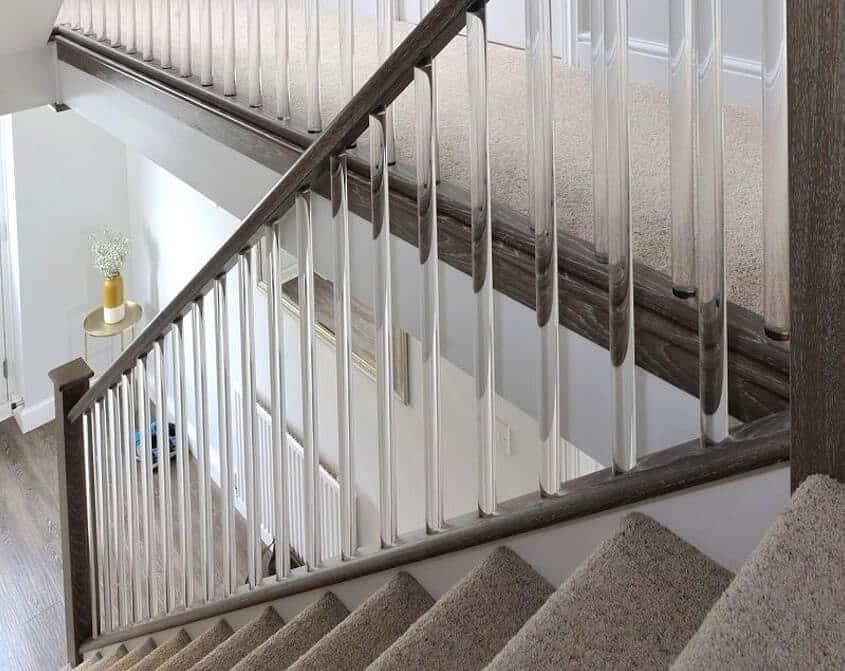
Your staircase is one of the most prominent features in your home, particularly when it is positioned within the entrance hallway. Over time, however, even a well-maintained staircase can begin to look outdated, especially when its spindles, handrails and other decorative features no longer complement the surrounding interior. Fortunately, transforming the appearance of your staircase does not always require a complete replacement. In many cases, replacing the existing spindles can make a significant difference without the disruption and expense of installing an entirely new staircase.
At Jarrods Staircases, we understand that homeowners often want to modernise their interiors while retaining the parts of their staircase that remain in good condition. Replacing stair spindles can be an effective way to refresh an existing design, introduce new materials and improve the overall appearance of your hallway. In this guide, we explore whether stair spindles can be replaced independently, the different options available and the important considerations involved in completing a successful staircase transformation.
What Are Stair Spindles and Why Are They Important?
Stair spindles, also commonly known as balusters, are the vertical components positioned between the handrail and the base rail or staircase string. Together, they form part of the balustrade, helping to prevent people from falling from the open side of a staircase.
Although spindles are often considered decorative features, they also perform an important safety function. Their spacing, strength and secure attachment contribute to the overall effectiveness of the balustrade.
Traditional British staircases frequently feature turned timber spindles, while contemporary designs may incorporate square timber profiles, metal balusters or glass panels.
The style of the spindles can dramatically influence the staircase’s appearance. Ornate timber designs may complement period properties, while simpler profiles can create a cleaner, more modern finish.
Replacing these components provides an opportunity to update the staircase without necessarily changing its supporting structure.
Can You Replace Stair Spindles Without Removing the Staircase?
Yes, in many cases, stair spindles can be replaced without removing the existing staircase. Provided the main structure, handrails and supporting components remain in suitable condition, the original spindles can often be removed and replaced with a different design.
This approach is particularly appealing for homeowners whose staircases remain structurally sound but have become visually outdated.
For example, a staircase featuring traditional turned timber spindles could potentially be updated with contemporary square balusters or carefully selected metal alternatives.
However, the feasibility of replacing individual components depends on how the existing balustrade was constructed.
Some spindles are secured within grooves beneath the handrail and above the base rail, while others use different fixing arrangements. Removing them without damaging the surrounding timber requires care and appropriate tools.
A professional assessment can establish whether the existing handrail and base rail can be retained or whether additional alterations will be necessary.
Why Do Homeowners Choose to Replace Their Stair Spindles?
One of the most common reasons for replacing stair spindles is to improve the appearance of an outdated staircase.
Interior design preferences change over time, and decorative features that were popular several decades ago may no longer suit a modern home.
Replacing ornate timber spindles with simpler profiles can create a more contemporary appearance without changing the staircase’s original layout.
Other homeowners want to introduce contrasting materials, such as metal balusters combined with timber handrails.
Damaged or loose spindles can also provide a practical reason for replacement. Components that have become cracked, unstable or detached may compromise the effectiveness of the balustrade.
In some properties, homeowners choose to replace spindles as part of a wider hallway renovation, coordinating the staircase with new flooring, doors and decorative finishes.
Whatever the motivation, carefully selected replacement spindles can transform the appearance of an existing staircase.
What Types of Stair Spindles Can You Choose From?
There are several spindle styles available, allowing homeowners to select a design that complements their property.
Traditional turned timber spindles remain popular in period-inspired interiors. Their decorative profiles can introduce character and work particularly well alongside classic handrails and newel posts.
Square timber spindles provide a simpler alternative, creating clean lines that suit both traditional and contemporary homes.
Metal spindles offer another attractive option, with finishes ranging from understated black to more decorative styles.
Some homeowners prefer to replace traditional spindles with glass panels, creating a more open appearance and allowing additional light to travel through the staircase.
However, glass panels require suitable supporting components and appropriate safety glazing, meaning the existing balustrade may need further modification.
At Jarrods Staircases, we believe that selecting the right spindle design involves considering the property’s character, the existing staircase and the overall appearance you want to achieve.
Can You Replace Wooden Spindles with Metal Spindles?
Replacing wooden spindles with metal alternatives can be an effective way to introduce a contemporary appearance while retaining much of the existing staircase.
Metal spindles are available in numerous designs, including simple straight profiles and more decorative arrangements.
Black metal balusters are particularly popular in modern interiors because they create an attractive contrast against natural timber or painted staircase components.
However, replacing timber with metal is not always a straightforward exchange.
The new spindles must be compatible with the existing handrail and base rail, and their fixing arrangements must provide adequate stability.
Differences in dimensions may require adjustments to the existing grooves or the installation of suitable fixing components.
The spacing between spindles must also satisfy applicable safety requirements.
Professional installation can help ensure that the finished balustrade looks attractive while remaining secure and suitable for everyday use.
Can You Replace Stair Spindles with Glass Panels?
Glass balustrades have become increasingly popular in British homes, particularly where homeowners want to create a brighter and more spacious appearance.
Replacing traditional spindles with glass panels can transform the staircase by removing much of the visual interruption created by individual vertical components.
This approach can be especially effective in narrow hallways where allowing light to pass through the balustrade helps create a more open atmosphere.
However, installing glass panels generally involves more than removing the existing spindles.
The handrail, base rail and supporting posts must be suitable for the proposed glazing system. Depending on the original staircase, these components may need to be modified or replaced.
The glass must also meet the relevant safety requirements for its location and intended use.
At Jarrods Staircases, we understand the importance of combining attractive contemporary design with practical safety considerations when planning staircase improvements.
Do You Need to Replace the Handrail at the Same Time?
Replacing stair spindles does not automatically mean that the existing handrail must also be replaced.
If the handrail is structurally sound, securely attached and compatible with the proposed spindle design, retaining it may be a practical option.
This can help reduce the amount of work required while preserving features that complement the surrounding interior.
However, some spindle designs require different fixing methods or dimensions that may not suit the original handrail.
For example, changing from traditional timber spindles to glass panels may require a different handrail arrangement.
Homeowners may also choose to replace the handrail for aesthetic reasons, particularly if they want a completely coordinated staircase design.
A new handrail can introduce a different timber finish, shape or colour, helping create a more substantial transformation.
The most appropriate approach depends on the condition of the existing components and the intended appearance of the finished staircase.
Are There Building Regulations for Stair Spindles in the UK?
Safety requirements are an important consideration when replacing stair spindles, particularly where the work involves changing the spacing or configuration of the balustrade.
In England, Approved Document K provides guidance on protection from falling, including requirements relevant to staircase guarding.
For many domestic staircase balustrades, openings should be sufficiently small to prevent a 100mm sphere from passing through.
This requirement helps reduce the risk of young children passing through gaps between spindles.
The height and strength of the guarding are also important, and the finished installation must provide appropriate protection against falls.
Requirements can differ depending on the staircase’s location, building type and applicable regulations.
Homeowners in Scotland, Wales and Northern Ireland should also consider the relevant local building standards.
Even where replacing spindles does not require a formal building control application, the finished balustrade should still meet appropriate safety standards.
How Much Does It Cost to Replace Stair Spindles?
The cost of replacing stair spindles varies depending on the number of components required, the chosen materials and the complexity of the installation.
A straightforward replacement using standard timber spindles may be relatively economical, particularly where the existing handrail and base rail can be retained.
More decorative timber profiles, specialist metal designs and bespoke components can increase material costs.
Replacing spindles with glass panels may involve additional expenditure because of the glazing, fixing systems and potential modifications to surrounding components.
Labour costs also depend on how easily the existing spindles can be removed and whether repairs are needed before installation.
For an accurate estimate, homeowners should obtain a quotation based on their staircase’s dimensions and the proposed design.
Although replacing spindles involves an investment, it can provide a noticeable visual improvement without the expense of replacing the entire staircase.
Can You Replace Stair Spindles Yourself?
Some homeowners with suitable woodworking experience may consider replacing traditional timber spindles themselves.
However, the process requires accurate measurements, appropriate tools and an understanding of how the balustrade is constructed.
Removing existing spindles incorrectly can damage the handrail, base rail or surrounding timber.
Installing replacements also requires careful attention to spacing, alignment and secure fixing.
Because spindles form part of the staircase’s protective guarding, an incorrectly completed installation can create serious safety risks.
More complex alterations involving metal balusters, glass panels or changes to the handrail arrangement are particularly suitable for professional installation.
At Jarrods Staircases, we recommend seeking specialist advice where there is any uncertainty about the condition or construction of the existing balustrade.
How Long Does It Take to Replace Stair Spindles?
The time required to replace stair spindles depends on the size of the staircase, the number of components and the extent of any associated alterations.
A relatively straightforward replacement on a standard domestic staircase may be completed within a short installation period, particularly when suitable replacement components have already been prepared.
However, more complicated projects can take longer.
Removing old spindles, repairing existing timber, adjusting fixing arrangements and completing decorative finishes can all add to the overall timescale.
Bespoke components may also require manufacturing before installation begins.
Homeowners should consider whether the staircase will remain accessible during the work, as sections of the balustrade may need to be temporarily removed.
Professional planning can help minimise disruption and ensure that the staircase is left safe and secure following installation.
When Should You Consider a Complete Staircase Renovation Instead?
Although replacing stair spindles can provide an impressive transformation, there are situations where a more comprehensive renovation may be appropriate.
If the staircase has damaged treads, loose handrails, deteriorating newel posts or widespread structural movement, replacing the spindles alone may not address the underlying problems.
A complete staircase renovation can provide an opportunity to upgrade several components together, creating a more consistent appearance.
This might involve replacing the balustrade, refreshing the treads and risers, installing new handrails or introducing different decorative finishes.
Renovation can also be particularly appealing when homeowners want to modernise a traditional staircase without changing its position or overall configuration.
The most suitable approach depends on the condition of the existing staircase and the scale of the transformation required.
Transform Your Staircase with Jarrods Staircases
Replacing stair spindles can be an excellent way to refresh your home’s interior without investing in a completely new staircase. From traditional timber designs to contemporary metal balusters and glass panels, there are numerous options available to suit different properties and personal preferences.
At Jarrods Staircases, we understand that even relatively small changes can make a significant difference to the appearance of a staircase. Choosing the right materials, finishes and installation methods can help transform an outdated feature into an attractive focal point.
Whether you want to replace worn spindles, modernise your balustrade or explore a more comprehensive staircase renovation, our team can help you consider the possibilities.
If you are thinking about updating your staircase, contact Jarrods Staircases to discuss your requirements and discover how carefully designed improvements could transform your home.