

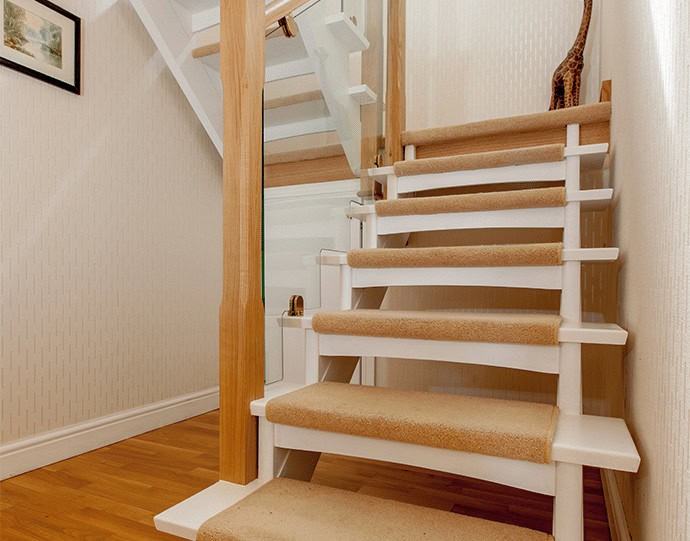
Carpeted staircases have been a familiar feature in British homes for generations, providing a soft, comfortable surface that helps reduce noise between floors. However, interior design preferences have changed considerably, and more homeowners are choosing to replace traditional stair carpets with attractive wooden finishes. Exposed timber treads can transform the appearance of a hallway, introducing natural warmth, character and a more contemporary feel. If you are considering making the change, you may be wondering whether it is possible to replace your existing carpeted stairs with wooden stairs without installing a completely new staircase.
At Jarrods Staircases, we understand that your staircase is one of the most important features within your home. Whether you want to refresh an outdated hallway, introduce a modern timber finish or completely redesign your staircase, there are several options available. In this guide, we explore how carpeted stairs can be transformed into wooden stairs, the materials worth considering and the practical factors that can influence your decision.
Can You Remove Stair Carpet and Leave the Wood Exposed?
In some properties, removing the existing stair carpet can reveal timber treads that are suitable for sanding, finishing and displaying as part of the staircase.
However, not every staircase has been constructed with the intention of leaving its timber exposed.
Many traditional carpeted staircases feature softwood treads that were originally designed to be covered. Although these components may be structurally sound, they can contain visible fixings, knots, previous repairs or imperfections that become apparent once the carpet is removed.
Adhesive residue, staples and damage caused by carpet grippers can also affect the appearance of the timber.
In some cases, the existing treads can be restored successfully. In others, replacing or covering them with suitable hardwood components may provide a more attractive and durable finish.
At Jarrods Staircases, we believe that assessing the condition of the original staircase is essential before deciding which approach will deliver the best results.
What Are the Benefits of Replacing Carpeted Stairs with Wood?
One of the main advantages of wooden stairs is their timeless appearance. Natural timber can complement a wide range of interior styles, from traditional cottages and Victorian terraces to modern detached properties.
Wooden staircases can also be easier to keep free from trapped dust and debris. Unlike carpet, timber does not retain dirt within fibres, making regular cleaning relatively straightforward.
Another benefit is the variety of finishes available. Homeowners can choose natural timber tones, darker stains or combinations of exposed wood and painted components.
Wooden stairs can also coordinate beautifully with existing flooring, interior doors and other architectural features.
However, there are practical differences to consider. Hard timber surfaces can produce more noticeable footfall noise and may feel less forgiving underfoot than carpet.
The best choice depends on the household’s priorities, lifestyle and preferred interior appearance.
Do You Need to Replace the Whole Staircase?
Replacing carpeted stairs with wooden stairs does not necessarily require a complete staircase replacement.
If the existing structure is sound and the step dimensions are suitable, a staircase renovation may provide an effective solution.
This could involve restoring the original timber treads, installing suitable replacement treads or introducing a professionally designed refurbishment system.
The existing strings, risers and supporting structure may be retained where their condition allows.
However, some staircases have significant wear, damaged components or structural problems that make renovation less practical.
A complete replacement may also be preferable if you want to change the staircase’s layout, introduce a different architectural style or improve its overall dimensions.
At Jarrods Staircases, we understand the importance of choosing a solution that addresses both appearance and functionality rather than replacing components unnecessarily.
What Is the Best Wood for Staircase Treads?
Choosing the right timber is one of the most important decisions when replacing carpeted stairs with wooden finishes.
Oak is a popular choice throughout the UK because of its attractive grain, strength and versatility. It can complement traditional interiors while also working beautifully within contemporary homes.
Ash is another option, offering a distinctive grain pattern and a relatively light natural appearance.
Walnut provides a darker, more luxurious finish that can create an impressive feature within a hallway.
Pine is commonly found in traditional staircase construction and can provide a more economical option, although it is generally softer and more susceptible to dents than many hardwood alternatives.
The most suitable timber depends on the desired appearance, budget and level of everyday use.
A professionally selected and finished timber tread can provide an attractive surface that complements the surrounding interior.
Can You Install Oak Treads Over Existing Stairs?
Installing oak treads or suitable oak refurbishment components over an existing staircase can be an effective way to achieve a natural timber appearance.
This approach may allow the original supporting structure to remain in place while introducing a new decorative surface.
However, the suitability of an overlay system depends on the condition and construction of the existing staircase.
Additional material can change the finished height of individual steps, particularly at the top and bottom of the flight.
These alterations must be considered carefully because inconsistent step heights can increase the risk of tripping.
The existing treads must also provide suitable support for the proposed installation.
Simply attaching decorative timber over damaged or unstable components is not an appropriate solution.
At Jarrods Staircases, we recommend professional assessment to determine whether refurbishment components or complete replacement treads would provide the best result.
Are Wooden Stairs More Slippery Than Carpeted Stairs?
Safety is an important consideration when changing from carpeted stairs to exposed timber.
Carpet generally provides a textured surface that can offer good grip, while certain polished timber finishes may become slippery, particularly when worn with socks or smooth-soled footwear.
However, wooden stairs can be designed and finished to provide suitable slip resistance.
The choice of protective coating, tread surface and any additional anti-slip features can influence how secure the staircase feels.
Some homeowners prefer to incorporate discreet anti-slip strips or a carpet runner, particularly in busy family homes.
It is also important to ensure that the staircase has suitable handrails and consistent step dimensions.
At Jarrods Staircases, we believe that attractive staircase design should always be balanced with practical safety considerations.
Will Wooden Stairs Be Noisier Than Carpeted Stairs?
Carpet helps absorb the sound of footsteps, which is one reason it remains popular in family homes.
When carpet is removed, the harder timber surface can make footfall noise more noticeable.
This does not necessarily mean that wooden stairs will creak more, as creaking is generally associated with movement between staircase components rather than the decorative surface itself.
However, footsteps, shoes and objects placed on the stairs may produce sharper sounds.
The construction of the staircase, quality of installation and surrounding acoustics can all influence noise levels.
Where noise reduction is particularly important, homeowners may consider incorporating a carpet runner or other suitable finishes.
Ensuring that the existing staircase is structurally sound before refurbishment can also help prevent unwanted movement and creaking.
Can You Have Wooden Treads with Painted Risers?
Combining wooden treads with painted risers is one of the most popular staircase design choices in British homes.
This arrangement creates an attractive contrast between the natural timber and the painted vertical sections.
White risers paired with oak treads can help brighten a hallway while retaining the warmth and character of the wood.
Darker painted finishes can also work effectively, particularly in contemporary interiors featuring contrasting doors and flooring.
Another advantage is the flexibility to coordinate the staircase with existing decorative features.
For example, painted risers can complement white interior doors, while natural timber treads provide a connection with wooden flooring.
At Jarrods Staircases, we understand how carefully selected materials and finishes can transform a staircase into a beautiful feature within the home.
Could a Timber Staircase Renovation Transform Your Hallway?
A staircase renovation provides an opportunity to improve more than the appearance of the individual steps.
Alongside replacing carpeted treads with wooden finishes, homeowners may choose to update the handrails, balustrades and newel posts.
Traditional turned spindles can be replaced with simpler timber profiles, while glass panels may help create a more open appearance.
New handrails and carefully selected finishes can also help coordinate the staircase with surrounding flooring and interior doors.
A comprehensive renovation can be particularly appealing when the existing staircase remains structurally sound but looks outdated.
At Jarrods Staircases, our Staircase Renovation options can help homeowners explore ways to refresh their interiors without necessarily changing the entire staircase structure.
The most appropriate improvements depend on the condition of the existing components and the desired final appearance.
Can Metal Staircases Include Wooden Treads?
Metal staircases can incorporate timber treads, creating an attractive combination of natural warmth and contemporary structural design.
At Jarrods Staircases, our Metal Staircases provide options for homeowners seeking something different from a traditional enclosed timber staircase.
Metal supports can be paired with oak or other suitable timber treads to create a distinctive architectural feature.
For properties with traditional interiors, Classic Metal Staircases can incorporate decorative metalwork alongside natural timber finishes.
Homeowners seeking a minimalist appearance may prefer Contemporary Metal Staircases, which often feature clean lines and understated supporting structures.
The combination of metal and timber can work particularly well in modern hallways and open-plan living areas.
However, changing from a conventional carpeted staircase to a metal design generally involves a more substantial installation rather than a straightforward surface renovation.
Are Floating Staircases a Good Alternative?
Homeowners considering a complete staircase transformation may also want to explore floating staircase designs.
At Jarrods Staircases, our Floating Staircases offer a striking contemporary alternative to traditional enclosed staircases.
These designs use carefully engineered supporting structures to create the appearance of individual steps projecting from a wall or central support.
Timber treads are particularly attractive in floating staircase designs because they introduce warmth while maintaining a minimalist appearance.
Glass balustrades can also be incorporated to allow light to pass through the surrounding space.
However, floating staircases require suitable structural support and must satisfy applicable building regulations.
They are not generally created by simply removing the risers or decorative coverings from an existing traditional staircase.
For homeowners planning a complete interior redesign, a professionally designed floating staircase can provide an impressive architectural feature.
How Much Does It Cost to Replace Carpeted Stairs with Wooden Stairs?
The cost of replacing carpeted stairs with wooden finishes depends on several factors, including the size of the staircase, the condition of the existing structure and the materials selected.
Restoring existing timber treads may involve less expenditure than installing new hardwood components, provided the original wood is suitable for refurbishment.
Oak and other premium hardwoods can increase material costs, particularly where bespoke treads are required.
Additional work may also be necessary to repair damaged risers, replace balustrades or improve the existing supporting structure.
A complete staircase replacement will generally involve a greater investment than a straightforward renovation.
Homeowners should also consider the cost of finishing treatments, installation and any surrounding decorative work.
Obtaining a detailed quotation based on the individual staircase is the most reliable way to understand the likely expenditure.
How Long Does It Take to Replace Carpeted Stairs with Wood?
The timescale for replacing carpeted stairs with wooden finishes depends on the extent of the work.
Removing carpet and restoring suitable existing timber may be relatively straightforward, although preparation, sanding and finishing can require several stages.
Installing replacement treads or refurbishment components may take longer, particularly where bespoke materials need to be manufactured.
A more extensive renovation involving handrails, balustrades and decorative alterations will require additional time.
The staircase may also need to remain temporarily out of use during certain stages of installation or while finishes cure.
At Jarrods Staircases, we understand that minimising disruption is important, particularly when the staircase provides the main access between floors.
Careful planning helps ensure that the work is completed efficiently while maintaining appropriate standards of installation and finishing.
How Do You Maintain Wooden Staircase Treads?
Wooden staircase treads can remain attractive for many years when maintained correctly.
Regular cleaning helps prevent dirt and grit from accumulating on the surface, which can gradually damage protective finishes.
A soft brush, vacuum with a suitable attachment or slightly damp cloth can usually remove everyday dust and debris.
Excessive water should be avoided because prolonged moisture exposure can damage timber and affect its finish.
The appropriate cleaning products depend on whether the wood has been treated with oil, lacquer or another protective coating.
Homeowners should also check periodically for signs of wear, loose components or damage.
Addressing minor issues early can help preserve the staircase’s appearance and functionality.
Transform Your Carpeted Staircase with Jarrods Staircases
Replacing carpeted stairs with wooden stairs can completely transform the appearance of your hallway, introducing natural character, attractive finishes and a more contemporary feel. Whether you want to expose existing timber, install beautiful oak treads or undertake a comprehensive staircase renovation, there are several options available.
At Jarrods Staircases, we understand that every property has different requirements. From traditional timber staircases and elegant classic metal designs to contemporary metal and floating staircases, we can help homeowners explore solutions that complement their interiors.
Our focus is on combining attractive craftsmanship with practical functionality, ensuring that staircase improvements enhance both the appearance and everyday usability of the home.
If you are considering replacing your stair carpet with wooden finishes or exploring a completely new staircase design, contact Jarrods Staircases to discuss your ideas and discover how we can help transform your home.