
Choosing the right wood for a staircase is an important decision when renovating your home or planning a completely new installation. A staircase is one of the most frequently used features in a property, so the timber you select needs to offer the right balance of durability, appearance, practicality and value for money. From the natural warmth of oak to the affordability of pine, different types of wood have distinct characteristics that can influence how your staircase looks and performs over time.
At Jarrods Staircases, we understand that every home has its own character and requirements. Some homeowners prefer the traditional appearance of a solid timber staircase, while others want to combine wooden treads with contemporary metalwork or glass balustrades. In this guide, we explore the most popular types of wood used for staircases in the UK, their advantages and potential drawbacks, and how to choose the most suitable material for your home.
Why Does the Type of Wood Matter for a Staircase?
The timber used in a staircase influences much more than its appearance. Different species vary in hardness, density, grain pattern and resistance to everyday wear.
Staircase treads experience regular foot traffic, making durability particularly important. Softer timbers can develop dents and scratches more easily, especially in busy family homes, while harder woods generally provide greater resistance to surface damage.
The choice of timber also affects the staircase’s overall appearance. Some woods have distinctive grain patterns and warm natural colours, while others provide a more understated finish that works particularly well in contemporary interiors.
Cost is another consideration, as premium hardwoods generally require a greater investment than commonly available softwoods.
At Jarrods Staircases, we believe that selecting the best timber involves considering how the staircase will be used, the surrounding interior and the homeowner’s long-term expectations.
Is Oak the Best Wood for a Staircase?
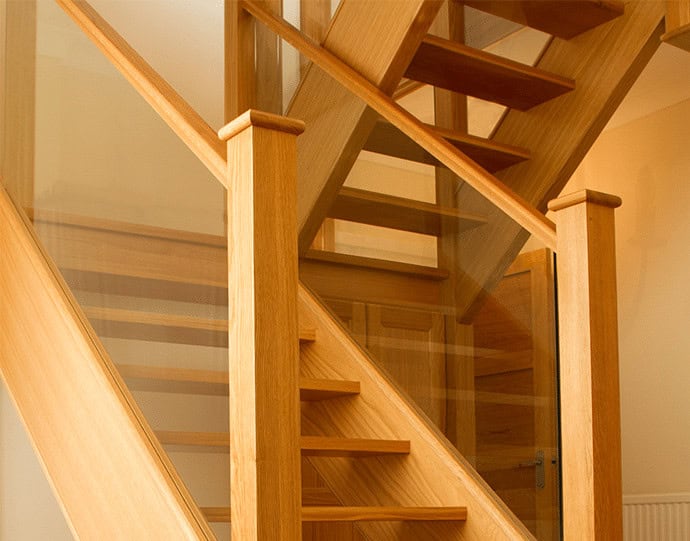
Oak is widely regarded as one of the most desirable timbers for staircase construction, particularly in British homes where natural materials and traditional craftsmanship remain popular.
Its attractive grain, strength and versatility make it suitable for both contemporary and traditional staircase designs.
Oak is a hardwood that offers good resistance to everyday wear, making it particularly appealing for staircase treads, handrails and newel posts.
Another advantage is its appearance. Natural oak can introduce warmth into a hallway, while different stains and protective finishes allow homeowners to achieve lighter or darker tones.
Oak also complements a wide range of interior materials, including stone flooring, painted doors, glass balustrades and metal components.
However, oak generally costs more than softwoods such as pine, and its natural colour can change gradually with age and exposure to light.
For homeowners seeking a combination of durability, attractive grain and timeless appeal, oak is often an excellent choice.
Are Pine Staircases a Good Option?
Pine is commonly used in staircase construction throughout the UK, particularly in properties where the staircase will be painted or covered with carpet.
One of its main advantages is affordability. Pine is generally less expensive than premium hardwoods, making it attractive for homeowners working within a more restricted budget.
It is also relatively easy to machine and finish, allowing it to be used for different staircase components.
However, pine is a softwood, meaning it is more susceptible to dents, scratches and other surface damage than harder timber species.
This can be particularly noticeable when pine treads are left exposed in busy households.
For painted staircases, pine can provide a practical solution because its natural appearance is less important beneath the decorative finish.
At Jarrods Staircases, we understand that a well-designed staircase does not always require the most expensive timber. The right material depends on its intended use and the finish you want to achieve.
Is Ash Suitable for Wooden Staircases?
Ash is another hardwood worth considering when choosing timber for a staircase.
It is known for its strength, distinctive grain and relatively light natural colour, making it an attractive option for homeowners who prefer bright, contemporary interiors.
Ash generally provides good resistance to wear and can be suitable for staircase treads and handrails when correctly specified and finished.
Its grain is often more pronounced than that of some other light-coloured timbers, creating an attractive natural feature.
Ash can also complement modern flooring and painted interior doors, particularly where neutral colours are used throughout the property.
However, availability can vary, and the choice of suitable material should be discussed with the staircase manufacturer.
For homeowners who appreciate natural timber but want an alternative to oak, ash can provide an appealing combination of strength and character.
Are Walnut Staircases Worth the Investment?
Walnut is often associated with premium furniture and luxury interior design because of its rich colour and distinctive grain patterns.
When incorporated into a staircase, walnut can create a striking architectural feature, particularly in properties featuring contemporary finishes.
Its naturally darker appearance can complement pale walls, glass balustrades and carefully selected metalwork.
Walnut can also work beautifully when used selectively for handrails or treads alongside contrasting materials.
However, walnut is generally more expensive than many commonly used staircase timbers, and it is not necessarily harder or more resistant to dents than oak.
Its darker appearance can also make dust and certain surface marks more noticeable.
For homeowners prioritising a distinctive, sophisticated appearance, walnut may be an attractive option, although the additional cost should be considered carefully.
What About Beech Staircases?
Beech is a hardwood that can provide a smooth, consistent appearance and good strength for interior staircase applications.
Its relatively fine grain and pale colouring make it particularly suitable for contemporary designs where a clean, understated finish is preferred.
Beech can be used for treads, handrails and other components when appropriately selected and manufactured.
However, it can respond noticeably to changes in moisture conditions, making correct preparation, finishing and installation particularly important.
Like other interior timbers, beech should be protected from excessive moisture and maintained in reasonably stable indoor conditions.
For homeowners looking for an alternative to oak or ash, beech may offer an attractive appearance that complements modern interiors.
The final decision should take account of the specific staircase design, material availability and the manufacturer’s recommendations.
Is Hardwood Better Than Softwood for Staircases?
Hardwood and softwood are botanical classifications rather than guaranteed measures of strength or durability. However, many hardwoods commonly used for staircases are denser and more resistant to surface damage than familiar softwoods such as pine.
For exposed staircase treads, hardwoods such as oak and ash are often preferred because they can better withstand regular foot traffic.
Softwoods can still provide suitable materials for staircase construction, particularly where components will be painted or carpeted.
The quality of the timber, structural design and installation are just as important as the species selected.
A properly constructed softwood staircase can provide many years of reliable service, while a poorly designed hardwood staircase may still experience movement or other problems.
At Jarrods Staircases, we believe that choosing between hardwood and softwood should involve considering the staircase’s construction, decorative finish and intended use.
Which Wood Is Best for a Modern Staircase?
Modern staircase designs often emphasise clean lines, natural materials and a sense of openness.
Light oak and ash can be particularly effective because their natural colouring complements neutral walls, contemporary flooring and glass balustrades.
Darker woods, including walnut, can also create a striking contrast in minimalist interiors.
At Jarrods Staircases, our Contemporary Metal Staircases can incorporate suitable timber treads to combine the warmth of wood with the clean appearance of metal construction.
This combination is particularly attractive in modern homes where the staircase forms part of an open-plan living area.
The best timber ultimately depends on the surrounding interior and the desired finish.
Choosing a wood that complements existing flooring and doors can help create a coordinated appearance throughout the property.
What Is the Best Wood for a Traditional Staircase?
Traditional staircases often feature decorative newel posts, shaped handrails and carefully detailed balustrades.
Oak is particularly suitable for these designs because of its natural character and long-established use in British joinery.
Its grain and warm colouring can complement period properties, cottages and traditional family homes.
Pine is another familiar choice, especially for painted staircases where decorative profiles are more important than the appearance of exposed timber.
At Jarrods Staircases, our traditional timber staircase designs can incorporate appropriate materials and finishes to complement the character of the property.
Our Classic Metal Staircases can also feature timber handrails or treads, creating an attractive combination of traditional metalwork and natural wood.
The aim should be to select materials that respect the surrounding architecture while providing comfortable and practical access between floors.
Can Wooden Treads Be Used on Floating Staircases?
Wooden treads are a popular feature of floating staircases because they introduce warmth while maintaining a minimalist appearance.
At Jarrods Staircases, our Floating Staircases provide an opportunity to combine natural timber with carefully engineered supporting structures.
Oak is particularly attractive for this type of design because of its strength, appearance and ability to complement contemporary interiors.
However, the suitability of any timber depends on the tread dimensions, supporting structure and overall staircase construction.
Floating staircase treads must be designed to withstand the loads associated with everyday use, making professional structural design essential.
Glass balustrades can further enhance the open appearance of the staircase, allowing the timber to become a prominent decorative feature.
For homeowners seeking a modern architectural statement, timber floating staircases can offer an impressive combination of natural materials and contemporary design.
Should Your Staircase Wood Match Your Flooring?
Matching your staircase with existing flooring can help create a consistent appearance throughout the home.
For example, oak staircase treads can complement oak flooring, particularly when their colours and finishes share similar undertones.
However, an exact match is not always necessary.
Slight variations in timber colour can create depth and visual interest, especially when painted risers or contrasting balustrades are incorporated.
Homeowners should also consider the direction and pattern of the grain, as these can influence how closely different wooden surfaces appear to match.
Natural timber changes colour over time, meaning newly installed staircase components may initially look different from older flooring.
Comparing samples within the property can help establish which combination will produce the most attractive result.
Which Wood Is Easiest to Maintain?
Most staircase timbers require relatively straightforward maintenance when protected with a suitable finish.
Regular cleaning helps prevent dirt and grit from scratching the surface, while appropriate protective coatings can improve resistance to everyday wear.
Hardwoods such as oak are often appealing because of their durability, although they are not immune to dents or scratches.
Softer timbers such as pine may show signs of wear more quickly, particularly on exposed treads.
The type of finish also influences maintenance requirements. Lacquered surfaces may provide a durable protective layer, while certain oiled finishes can allow localised maintenance depending on the product used.
Homeowners should follow the manufacturer’s cleaning and maintenance recommendations rather than using harsh chemicals or excessive water.
At Jarrods Staircases, we believe that selecting an appropriate finish is just as important as choosing the timber itself.
Can You Change the Wood on an Existing Staircase?
Replacing or upgrading the timber on an existing staircase may be possible without removing the entire structure.
A professional Staircase Renovation can involve replacing worn treads, updating handrails or introducing new timber finishes.
For example, an older painted staircase may be suitable for refurbishment with oak treads and complementary balustrades.
However, the condition of the existing structure must be assessed before work begins.
Adding new timber components can affect step dimensions, particularly where refurbishment materials increase the finished tread height.
Structural defects should also be addressed rather than concealed beneath decorative coverings.
Where the existing staircase is unsuitable for renovation, installing a completely new staircase may provide a better long-term solution.
Professional guidance can help determine which approach is most appropriate for the property.
How Much Does the Choice of Wood Affect Staircase Costs?
The timber species selected can have a significant influence on the overall cost of a staircase.
Pine is generally among the more economical options, particularly for staircases that will be painted or carpeted.
Oak and ash typically involve a greater material investment, while premium or less readily available timbers such as walnut can increase costs further.
However, the price of a staircase is not determined by the wood alone.
The overall configuration, dimensions, balustrade design, installation requirements and complexity of manufacture also influence the final quotation.
A straightforward oak staircase may therefore cost less than a highly elaborate design manufactured using a more economical timber.
At Jarrods Staircases, we recommend considering the complete staircase specification rather than comparing timber prices in isolation.
Choose the Right Wood for Your Staircase with Jarrods Staircases
The best wood for a staircase depends on your budget, preferred appearance and how the staircase will be used. Oak remains an excellent all-round choice for homeowners seeking durability and timeless character, while pine can provide an economical option for painted or carpeted installations. Ash, beech and walnut offer further possibilities for creating distinctive designs.
At Jarrods Staircases, we understand that choosing the right timber is only one part of creating a beautiful staircase. The configuration, balustrades, supporting structure and decorative finishes all contribute to the final result.
From traditional timber staircases and elegant classic metal designs to contemporary metal and floating staircases, we can help you explore options that complement your property.
If you are planning a staircase renovation or considering a completely new installation, contact Jarrods Staircases to discuss your requirements. Our team can help you explore suitable materials and designs to create a staircase that combines attractive craftsmanship, practical functionality and lasting appeal.