

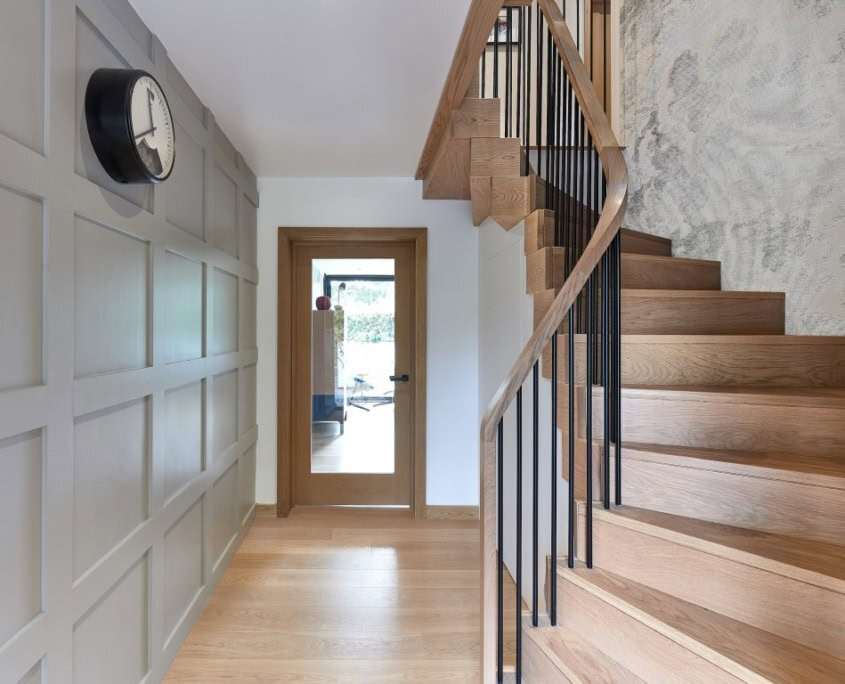
Uneven stairs can be a frustrating and potentially dangerous problem for homeowners, particularly when individual steps feel different in height, depth or stability. Although slight irregularities may go unnoticed for years, uneven staircases can become increasingly problematic as the structure ages. Whether you live in a traditional Victorian terrace, a modern detached property or a recently renovated home, understanding why stairs become uneven is important for maintaining a safe and comfortable living environment.
At Jarrods Staircases, we understand that a staircase is much more than a practical connection between floors. It is an essential feature of your home that should provide dependable access while complementing the surrounding interior. Uneven stairs can develop for several reasons, including timber movement, structural settlement, poor installation and general wear. In this guide, we explore the most common causes, how to identify potential problems and when professional staircase renovation or replacement may be the most appropriate solution.
What Causes Stairs to Become Uneven?
There are several reasons why a staircase might develop uneven steps. In some cases, the problem originates from the original installation, while in others, changes occur gradually as the property ages.
Traditional timber staircases consist of several interconnected components, including treads, risers and supporting strings. These elements must work together to maintain consistent step dimensions and provide adequate structural support.
Over time, timber can expand, contract or deteriorate, potentially affecting the position of individual steps. Loose fixings, damaged joints and movement within the surrounding building can also contribute to irregularities.
However, uneven stairs are not always caused by structural deterioration. Poor workmanship, alterations to floor coverings or incorrectly installed replacement treads can create differences between steps.
Identifying the underlying cause is essential because the appropriate repair will depend on whether the problem is cosmetic, localised or structural.
Can Natural Timber Movement Make Stairs Uneven?
Timber is a natural material that responds to changes in temperature and moisture levels. As humidity fluctuates throughout the year, wooden staircase components can expand and contract.
During winter, central heating often reduces indoor humidity, causing timber to lose moisture and shrink slightly. Conversely, increased humidity during warmer periods may encourage timber to absorb moisture and expand.
These changes are generally minor, but repeated movement can gradually affect joints and connections within an older staircase.
In some circumstances, timber may warp or distort, particularly if it has been exposed to excessive moisture or inadequate ventilation.
A warped tread can create an uneven walking surface, while movement between the tread and riser may cause an individual step to feel unstable.
Maintaining relatively consistent indoor conditions can help reduce excessive timber movement, although damaged or distorted components may require professional attention.
Does House Settlement Affect Staircase Levels?
Buildings naturally experience some movement over time, particularly as foundations and supporting structures respond to changing ground conditions.
In older British properties, historical settlement may have contributed to floors and walls becoming slightly uneven.
Because staircases connect different levels of a building, changes in the surrounding structure can sometimes influence their alignment.
For example, movement in a supporting wall or floor structure could affect how a staircase is positioned, potentially creating uneven steps or gaps around its connections.
However, it is important to distinguish between long-standing irregularities and new or progressive movement.
If your staircase has suddenly become uneven, or the problem is accompanied by widening cracks, sticking doors or noticeable floor movement, professional structural assessment may be necessary.
At Jarrods Staircases, we believe that understanding the condition of the surrounding property is an important part of identifying the most appropriate staircase solution.
Can Poor Staircase Installation Cause Uneven Steps?
Not all uneven staircases develop problems because of age or structural movement. In some cases, inconsistencies are present from the original installation.
A staircase must be designed with carefully calculated dimensions to ensure that the rise and going of each step remain consistent.
The rise is the vertical distance between consecutive steps, while the going refers to the horizontal distance between the nosings of successive treads.
If these measurements vary significantly, the staircase can feel uncomfortable or unpredictable to use.
Incorrectly positioned supporting components, poorly fitted treads or inaccurate measurements can all contribute to uneven steps.
These issues may become more noticeable when new flooring is installed or the surrounding interior is renovated.
Professional staircase design and installation help reduce the likelihood of dimensional inconsistencies and ensure that the finished structure provides comfortable access between floors.
Can New Flooring Make Your Stairs Uneven?
Changing the flooring around a staircase can sometimes create unexpected differences in step heights.
For example, replacing a thin carpet with thicker flooring at the bottom of a staircase can alter the height of the first step relative to the surrounding floor.
Similarly, installing additional flooring over the existing upper-floor surface can change the effective height of the final step.
Although these differences may appear small, they can disrupt the rhythm of walking upstairs or downstairs.
People become accustomed to consistent step dimensions, and unexpected variations can increase the risk of tripping.
This is particularly important when undertaking hallway renovations, installing laminate flooring or replacing carpets with timber finishes.
Any changes to finished floor levels should therefore be considered alongside the existing staircase dimensions.
A professional assessment can help establish whether adjustments are required to maintain safe and consistent access.
Are Uneven Stairs Dangerous?
Uneven stairs can present a genuine safety concern, particularly when individual steps have noticeably different heights or depths.
When walking upstairs or downstairs, people naturally develop a rhythm based on the expectation that each step will be similar.
An unexpectedly high or shallow step can interrupt this movement, increasing the likelihood of losing balance.
The risks may be greater for young children, older people and anyone with reduced mobility or impaired vision.
Loose or unstable treads can create additional hazards because they may move when weight is applied.
In England, Approved Document K provides guidance on staircase safety, including the importance of consistent rise and going dimensions within a flight.
If your staircase feels unstable, has developed sudden irregularities or shows signs of structural damage, it is sensible to arrange an inspection before continuing normal use.
How Can You Tell If Your Stairs Are Uneven?
Some staircase irregularities are immediately obvious, while others require closer inspection.
You may notice that one step feels higher than the others, that a tread slopes slightly or that the staircase produces unusual movement when walked upon.
Visible gaps between treads and risers can also indicate that components have shifted or become loose.
A spirit level may help identify whether individual treads are sloping, although this alone does not establish whether the staircase has been constructed correctly.
Accurate measurements of the rise and going are necessary to determine whether step dimensions remain consistent.
It is also important to inspect the surrounding structure for signs of movement, including cracks, damaged joints or changes in the position of the staircase.
Where significant irregularities are present, a professional staircase survey can help identify the underlying problem.
Can Uneven Stairs Be Repaired?
Many uneven staircases can be repaired, particularly where the problem is limited to individual components rather than the overall structure.
For example, a damaged tread may be replaced, while loose joints can sometimes be reinforced using appropriate fixings and repair methods.
Where timber has warped or deteriorated, replacing the affected component may restore a more consistent walking surface.
However, simply adding material to an uneven step is not always an appropriate solution.
Any alteration must account for the dimensions of the entire staircase, ensuring that correcting one step does not create inconsistencies elsewhere.
More substantial problems involving the supporting strings, surrounding floors or structural connections may require extensive work.
At Jarrods Staircases, we recommend identifying the cause before undertaking repairs, as cosmetic adjustments alone may fail to resolve the underlying issue.
When Should You Consider a Staircase Renovation?
A staircase renovation can be an attractive option when the existing structure remains suitable for continued use but requires improvements to its appearance or individual components.
Renovation projects may involve replacing worn treads, upgrading risers, installing new balustrades or refreshing existing timber finishes.
Where unevenness results from damaged or poorly fitted components, suitable renovation work may help restore the staircase’s functionality.
However, renovation is not always appropriate where the original staircase has significant structural problems or fundamentally incorrect dimensions.
A thorough assessment is important to establish whether the existing structure can be safely retained.
For homeowners who also want to modernise their interior, renovation provides an opportunity to combine practical improvements with attractive new materials and finishes.
This can help transform a tired staircase into a feature that better complements the surrounding property.
Could a New Timber Staircase Be the Best Solution?
Timber staircases remain a popular choice throughout the UK because of their versatility, natural appearance and ability to complement different interior styles.
At Jarrods Staircases, we offer staircase solutions that can suit both traditional and contemporary properties, including beautiful timber designs.
Where an existing staircase has extensive deterioration or unsuitable dimensions, a new timber staircase may provide a more practical long-term solution than repeated repairs.
Timber can be incorporated into straight, quarter-turn and half-turn staircase configurations, depending on the available space and property layout.
Different finishes also allow homeowners to create a staircase that complements their interior, from traditional natural wood to more contemporary painted designs.
A professionally manufactured and installed staircase provides an opportunity to address existing dimensional problems while introducing an attractive new feature.
Are Metal Staircases Suitable for Modern Homes?
Metal staircases can provide an appealing alternative to traditional timber construction, particularly for homeowners seeking a distinctive architectural feature.
At Jarrods Staircases, our staircase design options include metal staircases that can complement a variety of interior styles.
Classic metal staircases can incorporate traditional detailing and decorative features, making them suitable for period-inspired interiors.
Contemporary metal staircases, meanwhile, often feature cleaner lines and minimalist designs that work particularly well in modern properties.
Metal can also be combined with timber treads or glass balustrades to create an attractive contrast between materials.
Regardless of the chosen appearance, accurate manufacturing and installation are essential for maintaining consistent step dimensions and dependable structural performance.
A carefully designed metal staircase can therefore provide both visual appeal and practical functionality.
Could Floating Staircases Transform Your Interior?
Floating staircases have become increasingly popular among homeowners looking to introduce a contemporary feature into their properties.
These designs create the impression that individual steps are suspended or projecting from the surrounding structure.
At Jarrods Staircases, floating staircase designs offer an exciting option for homeowners considering a more substantial interior transformation.
Depending on the design, floating staircases may incorporate timber treads, concealed steel supports and glass balustrades.
Their open appearance can help maintain visibility through the staircase and contribute to a greater sense of space.
However, floating staircases require particularly careful structural design because the supporting components must safely accommodate the loads placed upon them.
Where an existing staircase has become uneven or structurally unsuitable, a professionally designed replacement can provide an opportunity to explore a completely different architectural style.
How Can You Prevent Staircase Problems in the Future?
Regular maintenance can help reduce the likelihood of staircase problems developing over time.
For timber staircases, maintaining reasonably consistent indoor humidity can help minimise excessive expansion and contraction.
It is also worth checking periodically for loose components, damaged treads and changes in the staircase’s stability.
Unusual movement, persistent creaking or visible gaps should not be ignored, particularly if the problem appears to be worsening.
Homeowners should also consider the potential impact of renovations, including changes to flooring levels or alterations to surrounding walls.
Where repairs or modifications are necessary, using experienced professionals can help ensure that the work is completed appropriately.
A well-designed staircase, combined with suitable maintenance, should provide many years of reliable everyday use.
Restore Your Staircase with Jarrods Staircases
Uneven stairs can develop for several reasons, from natural timber movement and general wear to structural settlement and installation problems. Although some issues can be resolved through targeted repairs, others may require more extensive renovation or complete replacement.
At Jarrods Staircases, we understand the importance of combining safe, practical staircase design with attractive craftsmanship. Whether you prefer the timeless appearance of a traditional timber staircase, the distinctive character of a classic metal design or the clean lines of a contemporary floating staircase, choosing the right solution can make a significant difference to your home.
If your staircase has become uneven or you are considering upgrading an existing installation, contact Jarrods Staircases to discuss your requirements. Our team can help you explore suitable staircase designs and discover how a carefully planned renovation or replacement could improve both the appearance and functionality of your property.